
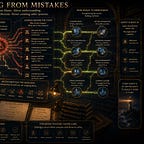

This chapter explores one of the most challenging and important realities in healthcare: medical error. Despite the dedication, expertise, and good intentions of clinicians, mistakes occur. Understanding why they happen—and how systems can reduce their occurrence—is essential to improving patient safety and the quality of psychiatric care.
Medical error is often viewed through the lens of individual failure, yet the chapter emphasises that errors typically arise from the interaction between human limitations and system vulnerabilities. Fatigue, cognitive bias, communication breakdowns, inadequate processes, organisational culture, and complex clinical environments all contribute to risk.
A central theme is the distinction between blame and learning. While accountability remains important, focusing solely on individual fault can obscure the deeper causes of error. Modern patient safety approaches seek to understand how mistakes emerge within systems and how those systems can be redesigned to reduce future harm.
The chapter examines common sources of error in psychiatric practice, including diagnostic errors, medication-related incidents, failures of communication, inadequate risk assessment, documentation problems, and transitions of care. Psychiatric settings present unique challenges because uncertainty, complexity, and subjective information are often central to clinical decision-making.
Another important concept is cognitive bias. Clinicians, like all human beings, rely on mental shortcuts that can sometimes distort judgement. Anchoring, confirmation bias, premature closure, and overconfidence can all contribute to errors despite the best intentions.
The chapter also highlights the emotional impact of error on clinicians. Healthcare professionals may experience guilt, shame, self-doubt, and distress following adverse events. Creating a culture of openness and support is therefore critical not only for patient safety but also for clinician wellbeing.
Ultimately, this chapter reframes medical error as an opportunity for continuous learning. Safe systems are not those that eliminate human fallibility, but those that anticipate it, mitigate it, and learn from it.
Key Takeaways
Medical errors arise from interactions between human factors and system vulnerabilities.
Patient safety improves when organisations focus on learning rather than blame alone.
Psychiatric errors may involve diagnosis, communication, risk assessment, medication, and documentation.
Cognitive biases can influence clinical judgement and decision-making.
Complex systems often contribute to adverse events.
Transparency and reporting are essential for organisational learning.
Clinicians may experience significant emotional consequences following errors.
High-quality care requires a culture of safety, reflection, and continuous improvement.


