
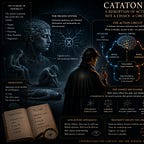

Catatonia is one of the most striking and often misunderstood syndromes in psychiatry. It is not defined by a single disorder, but by a pattern of motor, behavioural, and physiological abnormalities that reflect a profound disturbance in the regulation of action.
In this episode, we explore how catatonia can present across a spectrum - from marked immobility, mutism, and withdrawal, to states of agitation, stereotypy, and excessive motor activity. These contrasting presentations reflect a common underlying disruption in how the brain initiates and modulates behaviour.
We examine how catatonia occurs in a range of contexts, including mood disorders, psychotic disorders, and medical or neurological conditions. It is therefore a syndrome that demands broad clinical thinking rather than narrow categorisation.
A key theme is reversibility. Despite its severity, catatonia is often highly responsive to treatment - particularly benzodiazepines and, in some cases, electroconvulsive therapy. Early recognition is therefore critical.
This chapter challenges the clinician to look beyond appearance. What may seem like refusal, resistance, or behavioural disturbance is often a disorder of the brain’s motor and regulatory systems - a failure not of will, but of function.
Key Takeaways
Catatonia is a syndrome involving motor, behavioural, and physiological abnormalities.
Presentations range from immobility and mutism to agitation and stereotypy.
It occurs across multiple psychiatric and medical conditions.
Catatonia reflects disruption in systems regulating action and behaviour.
It is often highly treatable if recognised early.
Benzodiazepines and ECT are key treatments.
Misinterpretation can delay effective care.


