
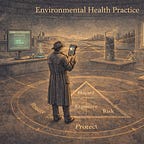

Environmental health practice bridges epidemiology, toxicology, regulation, and risk communication. It addresses how air, water, soil, radiation, chemicals, occupational settings, and the built environment influence population health.
This chapter explores exposure assessment, risk assessment frameworks, hazard identification, dose–response relationships, environmental monitoring, and regulatory standards. It examines how environmental incidents are managed, how standards are developed, and how uncertainty is communicated.
Environmental health practice is operational public health - converting evidence into enforceable limits, inspections, surveillance systems, and prevention strategies. It requires scientific rigour alongside governance and accountability.
Protection depends on measurement - and measurement demands integrity.
Key Takeaways
Environmental health addresses physical, chemical, and biological exposures.
Risk assessment integrates hazard identification, exposure, and dose–response.
Monitoring systems detect environmental threats before harm escalates.
Regulation and standards protect population health.
Communication of uncertainty is central to public trust.
Environmental health practice spans local inspection to global governance.
Prevention is achieved through structural control, not individual vigilance alone.


