
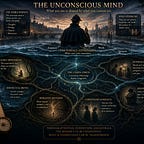

This chapter explores the foundations and evolution of psychoanalytic theory, focusing on how unconscious processes shape thought, emotion, and behaviour. Originating in the work of Freud and developed across multiple schools in North America and Great Britain, psychoanalysis offers a framework for understanding the inner world of the mind.
At its core is the concept of the unconscious - mental processes that operate outside awareness but exert powerful influence. Conflicts between desires, defences, and internalised relationships give rise to symptoms, patterns of behaviour, and emotional experience.
A central theme is the role of defence mechanisms. These are psychological strategies used to manage internal conflict and protect the individual from distress. While often adaptive, they can also become rigid or maladaptive, shaping how reality is perceived and responded to.
The therapeutic process is relational. Through the analytic relationship, patterns of thought and feeling are brought into awareness. Transference and countertransference become key tools, revealing how past relational experiences are re-enacted in the present.
Interpretation, insight, and working through are central mechanisms of change. The aim is not simply symptom relief, but a deeper restructuring of the individual’s internal world - increasing flexibility, awareness, and capacity for meaningful relationships.
Clinically, this chapter highlights that symptoms are not random - they are expressions of underlying psychological processes, often rooted in developmental history.
Key Takeaways
Psychoanalytic theory emphasises the role of the unconscious.
Internal conflicts shape behaviour, emotion, and symptoms.
Defence mechanisms regulate psychological distress.
Early relationships influence later patterns of thinking and relating.
Transference and countertransference are central to therapy.
Insight and working through facilitate change.
Symptoms can be understood as meaningful expressions of internal processes.


