
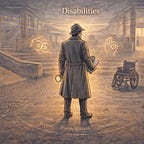

Disability is not solely a medical condition; it is the interaction between health states and social environments. This chapter explores the epidemiology of disability across the life course, including physical, sensory, intellectual, and psychosocial impairments.
It examines ageing-related disability, childhood developmental disability, injury-related impairment, and chronic disease-associated limitation. Crucially, it highlights the distinction between impairment and participation restriction - emphasising how social, architectural, educational, and economic barriers shape lived experience.
Public health strategies move beyond treatment to accessibility, inclusive policy, assistive technologies, community participation, and rights-based approaches. Disability is framed not as deficit, but as diversity requiring structural adaptation.
Health systems are judged not only by cure, but by inclusion.
Key Takeaways
Disability reflects interaction between health conditions and environmental barriers.
Ageing populations increase the prevalence of disability globally.
Social exclusion and poverty disproportionately affect people with disabilities.
Access to education, employment, and healthcare is often restricted.
Assistive technologies and inclusive design improve participation.
Rights-based approaches are central to modern disability policy.
Public health must integrate inclusion into planning and infrastructure.


