
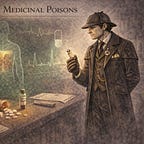

Many substances designed to heal can harm when misused, miscalculated, or maliciously administered.
In this episode, we examine medicinal poisons - therapeutic agents that may become toxic in overdose, error, or deliberate ingestion. These cases often involve complex pharmacology, variable tolerance, and subtle pathological findings.
We explore:
Paracetamol toxicity and delayed hepatic failure.
Tricyclic antidepressants and cardiac conduction disturbance.
Digoxin and arrhythmia.
Insulin and hypoglycaemia.
Anticoagulants and haemorrhagic complications.
Drug interactions and cumulative toxicity.
Therapeutic error versus intentional overdose.
The role of prescription history in forensic interpretation.
A central principle emerges: dose determines harm. Therapeutic intent does not eliminate toxic potential. Interpretation must consider timing, co-morbidities, and delayed physiological effects.
We also address:
Post-mortem drug redistribution.
The difference between therapeutic, toxic, and fatal concentrations.
Clinical presentation prior to death.
The medico-legal phrasing of overdose findings.
The importance of careful toxicological sampling.
Medicinal poisons blur the boundary between therapy and lethality - requiring meticulous analysis.
Key Takeaways
Common medications may become fatal in overdose.
Toxicity may be delayed, particularly in hepatic injury.
Concentration ranges must be interpreted cautiously.
Prescription access informs forensic context.
Mixed ingestion complicates interpretation.
Documentation must distinguish accident, self-harm, and error without speculation.
This episode highlights the forensic challenge of interpreting substances originally intended for healing.


