
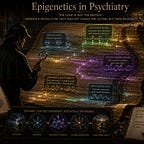

If the genome provides the script, epigenetics determines how it is read. This chapter explores how environmental influences - from early life experiences to chronic stress - can modify gene expression without altering the underlying DNA sequence.
In this episode, we examine mechanisms such as DNA methylation and histone modification, which regulate whether genes are activated or silenced. These processes act as molecular switches, shaping how genetic potential is realised across development and throughout life.
Crucially, epigenetics provides a bridge between biology and experience. It offers a framework for understanding how adversity, trauma, and environment can become biologically embedded - influencing vulnerability to psychiatric disorders.
We also explore the emerging potential of epigenetic markers as biomarkers for diagnosis and prognosis, as well as targets for novel treatments. However, this promise is accompanied by complexity - epigenetic changes are dynamic, context-dependent, and not easily reduced to simple clinical tools.
This chapter reframes nature versus nurture as a false dichotomy. Instead, it presents a dynamic interaction where experience continuously shapes biology - and biology, in turn, shapes experience.
Key Takeaways
Epigenetics involves changes in gene expression without altering DNA sequence.
Mechanisms include DNA methylation and histone modification.
Environmental factors can influence gene expression across the lifespan.
Epigenetics provides a biological link between experience and psychiatric vulnerability.
Adversity and stress can become biologically embedded through these mechanisms.
Epigenetic markers hold potential as biomarkers and treatment targets.
Gene–environment interaction is central to understanding psychiatric disorders.


