
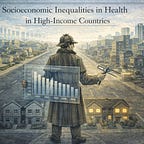

High-income countries are often assumed to have solved the major health challenges of poverty and infectious disease. Yet stark socioeconomic inequalities in health persist - even within the most affluent societies.
In this chapter, we examine the empirical evidence demonstrating health gradients across income, education, occupation, and neighbourhood status in developed countries. Life expectancy, cardiovascular disease, cancer outcomes, mental health disorders, and infant mortality all vary systematically along social lines.
The episode explores the mechanisms underlying these gradients: material deprivation, psychosocial stress, occupational exposure, behavioural risk patterns shaped by context, and access differentials within health systems.
Importantly, we analyse policy responses. Should interventions focus on the most disadvantaged groups, or aim to reduce the gradient across the whole population? The debate between targeted approaches and proportionate universalism becomes central.
We also consider political feasibility. Evidence alone does not drive change; public support, economic narratives, and institutional structures influence whether inequality reduction strategies are adopted.
This chapter reinforces a critical lesson: inequality is not eliminated by economic growth alone. It requires deliberate, sustained policy design.
Key Takeaways
Significant health gradients persist within high-income countries.
Inequalities affect both morbidity and mortality.
Social position influences exposure, vulnerability, and recovery.
Psychosocial stress contributes independently to disease risk.
Universal systems may still produce unequal outcomes.
Targeted vs population-wide approaches remain debated.
Proportionate universalism aims to combine fairness with efficiency.
Reducing inequality requires cross-sector policy intervention.


